portfolio
When Private Colleges Cut Ties With Presidents, It Can Mean a 6-Figure Golden Parachute

- By Dan Bauman
- Date: August 09, 2019
Originally published by The Chronicle of Higher Education at https://www.chronicle.com/article/when-private-colleges-cut-ties-with-presidents-it-can-mean-a-6-figure-golden-parachute/ [Archived]
Reason for republication: Paywall
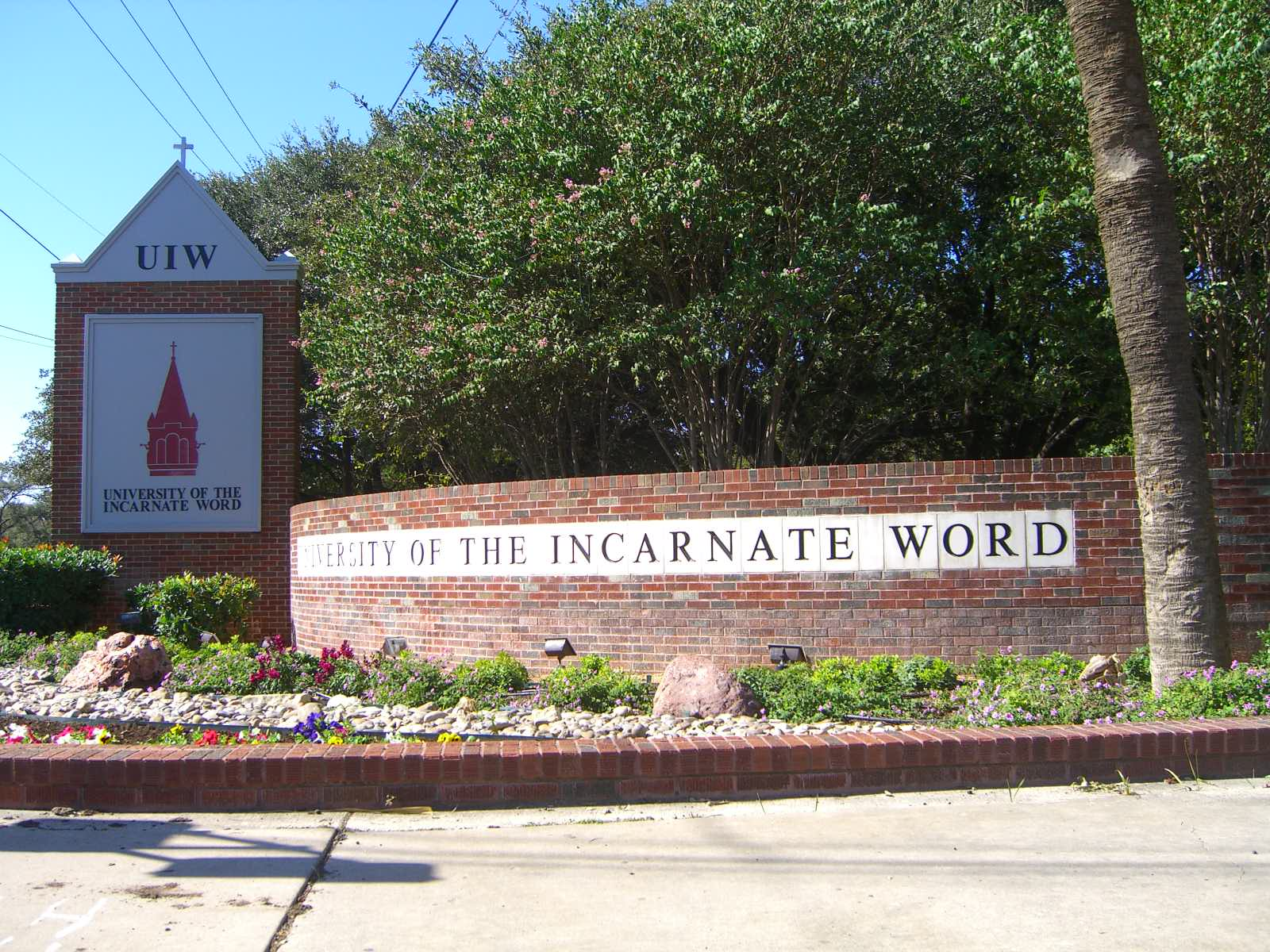
Three years ago, the University of the Incarnate Word was going through a messy divorce with its president.
The board of the private college in San Antonio placed Louis Agnese Jr. on medical leave, citing his “sporadic uncharacteristic behavior and comments,” which the local media would later report was a series of offensive comments to students by the president.
Agnese did not appreciate the board’s comments and made his displeasure known to reporters. “They ruined my reputation of 31 years,” Agnese told the San Antonio Express-News. “They will send out a retraction by Monday or I will sue the chair of the board. You can put that in the paper in quotes.”
He was removed as president. Soon after, Incarnate Word named him president emeritus. The new title came with a change in tone from Agnese. Two years after he had threatened a lawsuit, Agnese characterized his relationship with the university’s board as warm.
Why the change in tone?
Time heals all wounds, to be sure. In Agnese’s case, a seven-figure exit payment may also have played a role. According to tax documents from Incarnate Word that were recently made public after a request from The Chronicle, Agnese received a severance payment in 2017 of $860,000 as part of his retirement package. The university also paid its former president a $1.14-million bonus as well as $906,000 in unspecified earnings. In total, Agnese earned $2.9 million from Incarnate Word in 2017. In addition, the university set aside more than $2.58 million in retirement and deferred compensation for Agnese that year, to potentially be paid out to the president emeritus in later years.
In a written statement, a spokeswoman for Incarnate Word said that, upon Agnese’s retirement, the university’s board had voted to award the former president “compensation commensurate with his 31 years of service to the university as well as his role in the growth of the institution, its enrollment and endowment.” Agnese did not respond to a request for comment.
Presidential divorces in academe have become highly choreographed affairs. The arrangement between Agnese and Incarnate Word is one of several recent examples of those struck by private colleges and former presidents, tucked away in newly released tax documents. The severance packages run well into six figures, and they are often accompanied by conditions that the parties not speak ill of each other.
Kevin R. McClure, an assistant professor of higher education at the University of North Carolina at Wilmington, said the size of severance arrangements like Agnese’s and other chief executives raises questions about whether presidential compensation is truly being driven by outcomes, as some contend.
“The justification is that we need to be paying presidents more in order to attract them and keep them, but I think it’s an open question about whether that is actually playing out,” McClure said.
Though evidence might be scant on the relationship between presidential compensation and basic results, Raymond D. Cotton, a Washington lawyer who represents college presidents and boards in contract negotiations, said severance packages protect boards against the threat of protracted litigation and court-mandated discovery into a university’s internal processes. Other arrangements carry nondisparagement clauses that protect the institution’s reputation with both future presidential candidates and the public.
“That’s the cost of doing business, so to speak,” Cotton said. “The greater cost would be for a university to put itself willingly in a position where there is no severance.”
Other Packages
In addition to Agnese, several other former presidents of private, nonprofit colleges and universities received sizable payouts in their final calendar year on the job.
Ithaca College’s Thomas R. Rochon resigned as president under pressure from student and faculty protesters, who accused him of bungling responses to racist and racially insensitive incidents on the New York campus. For much of 2015, Rochon had rebuffed repeated calls for his resignation, including a no-confidence vote by the faculty. He resigned in 2016 and earned nearly $928,000 in reportable compensation and nontaxable benefits in 2017. Of that total, $562,000 came from a severance payment. The year before, he earned just over $1 million. Reached for comment, a university spokesman pointed to comments made at the time of Rochon’s resignation, when the Board of Trustees’ chair and vice chair praised Rochon for his service to the institution.
At Carnegie Mellon University, Subra Suresh gave just one month’s public notice of his resignation as president. At the time, June 2017, Suresh had served as chief executive of the institution for four years. He wrote that Carnegie Mellon needed a president who was ready to make an “extended commitment.” All told, Suresh left the university with $1.17 million earned in the form of compensation and nontaxable benefits, $432,000 of which came from a severance arrangement. Carnegie Mellon declined to comment on the matter.
Thomas W. Krise’s abrupt announcement, in April 2017, that he would resign as president of Pacific Lutheran University, in Washington, surprised students. Krise gave no explanation at the time, though the board chairman said the change was not the result of regents’ dissatisfaction. Krise received a $257,500 payout in 2017, money that had been set aside as part of a deferred-compensation arrangement. He was appointed as the president of the University of Guam in 2018.
The details of the severance payments made to the former chief executives of Monmouth University, in New Jersey, and Washington College, in Maryland, are murkier. At Washington College, Sheila C. Bair, a former chair of the Federal Deposit Insurance Corporation, left the position after just two years on the job. And Paul R. Brown had held the job as president of Monmouth for only three years.
References to 2017 severance packages appear in the tax documents for each institution, but neither of them named the person who had received the payments. When The Chronicle asked who the recipient was, Washington College cited a confidentiality agreement preventing the disclosure of the employee’s name. Officials at both institutions also declined to provide additional information regarding the respective recipients of the payments.
But the candidates are few. Collectively, the tax documents for both institutions provide the names of 31 employees who could have received the severance payments. Most of the people named either remained with their respective institutions or left after 2017. The Chronicle contacted the remaining possibilities — employees whose tenures with Washington or with Monmouth ended in 2017 or the years leading up to it. The Chronicle asked them directly if they had been paid a severance in 2017. All but Bair and Brown said they had not. A representative for Bair declined to address the question and said Bair had resigned from Washington due to family hardships. A phone message taken by Brown’s wife was not returned.
The tax documents for each institution show reportable compensation that came in the form of base salary and bonuses, as well as a catch-all category, called “Other reportable compensation,” that often includes severance payments, though it can also reflect the value of any other form of compensation that is taxable in the calendar year, from auto allowances to college-football tickets. In 2017, Bair earned $204,000 in the Other category. The year before, Washington College reported that Bair earned $3,215 in that catch-all category. Monmouth reported in 2017 that Brown earned more than $605,000 in the Other category. In 2016 the pay Brown received from those sources was $19,201.