portfolio
How the NCAA’s March Madness Windfall Makes Its Way to Colleges
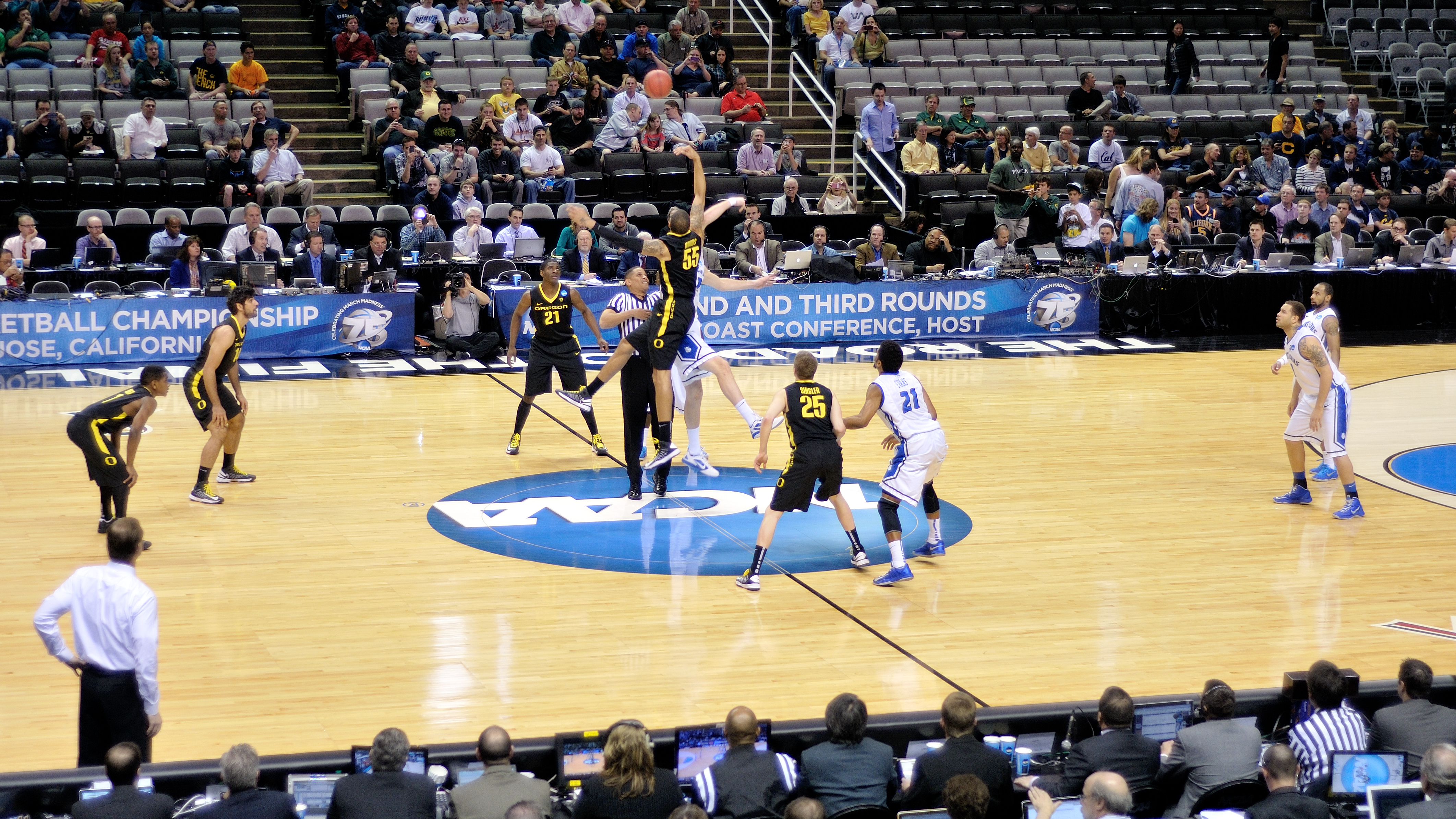

- By Dan Bauman and Tyler Davis
- Date: March 12, 2018
Originally published by The Chronicle of Higher Education at https://www.chronicle.com/article/how-the-ncaas-march-madness-windfall-makes-its-way-to-colleges/ [Archived]
Reason for republication: Paywall; Degraded Assets
For most Americans, the arrival of March means the welcome return of office pools and Cinderella stories. But for college athletic departments, March Madness signals another tradition: payday.
The National Collegiate Athletic Association’s annual men’s basketball tournament is as lucrative as ever for the association and its member institutions. According to recently released financial statements, revenue earned by the NCAA surpassed $1 billion for the first time ever in the 2017 fiscal year, with the sale of basketball television rights accounting for 80 percent of the haul.
If past is prologue, much of this year’s March Madness revenue will be redistributed to the top-performing colleges and their parent conferences. According to financial data for the 2016 fiscal year, the NCAA made $788 million in cash payments to colleges and their associated athletic conferences that year — with most of the money going to Division I members.
The NCAA uses a variety of formulas to distribute those funds to member institutions, factoring in colleges’ performance over the tourney’s past six years, the number of full rides given to athletes, and the institutions’ support of nonrevenue sports.
Conference bylaws and institutions’ choices determine how much of that money flows directly to athletic departments and how much is routed to conferences, said Andy Schwarz, an antitrust economist who has appeared as an expert witness in lawsuits brought by former players against the NCAA. The association’s largest cash payment to an individual organization in 2016 went to the Big Ten Conference, not an individual college or university.
It is conferences, not the NCAA, that write the big paychecks to colleges when it comes to sports. The largest single payment to an individual institution by the NCAA in 2016 was $3.25 million to Stanford University.
Compare that with the $42.3 million the Southeastern Conference paid to the University of Georgia in the same year.
In addition to NCAA disbursements, the SEC and its Power Five counterparts — the conferences in the Football Bowl Subdivision (FBS) of Division I — earn significant sums of money through the sale of television rights for their own games and a monopoly over FBS competition. The Atlantic Coast Conference, Big Ten, Big 12, Pacific-12, and SEC each earned $300 million to $640 million in revenue in 2015-16. The average payment from a Power Five conference to one of its members in that period was $30 million. (The University of Notre Dame received substantially less money from the ACC than did its counterparts, in large part because its football team is not affiliated with the conference.)
In contrast, Conference USA — which will be represented by Marshall University in this year’s tournament — earned just $50 million in revenue that year. Of that sum, the conference sent its largest payment to Marshall: $4.55 million.
Of course, even those relatively small NCAA and conference cash payments are significant. Marshall’s combined conference and NCAA disbursements accounted for one-fifth of its athletic program’s revenue that year.
The reason Marshall isn’t paid the same as, say, Ohio State University is the outsize influence and negotiating power the Power Five conference hold over the NCAA, said Daniel A. Rascher, a sports economist and program director at the University of San Francisco.
The NCAA’s disbursement formulas skew toward the Power Five, whose member institutions appear more often in the basketball tournament as a result of sheer numbers. (The ACC sent nine teams to the tournament this year, and the SEC sent eight. Conference USA will be represented solely by Marshall, after Middle Tennessee State University landed on the wrong side of the tourney’s at-large bubble.)
Major-conference programs also have the means to support more full scholarships and nonrevenue sports than smaller athletic programs do.
Were the NCAA and its member institutions ever to decide to equalize the payments made to tournament competitors and other members, Rascher said, “Ohio State would talk to all of its brethren and say, ‘Let’s leave. If we aren’t getting our fair share, let’s leave.’”
In fact, the college football playoffs — an event not administered by the NCAA — essentially transfers all of that revenue to the Power Five colleges. If they felt that the NCAA wasn’t compensating them enough for their ability to draw an audience, Rascher said, they could create their own basketball tournament and minimize the appeal of March Madness to advertisers and broadcasters.
“It’s a really interesting issue that the NCAA itself grapples with,” Rascher said, “trying to create some sort of fairness or equal payouts, versus the strength of the power schools.”