portfolio
How a Defense Dept. Program Equips Campus Police Forces
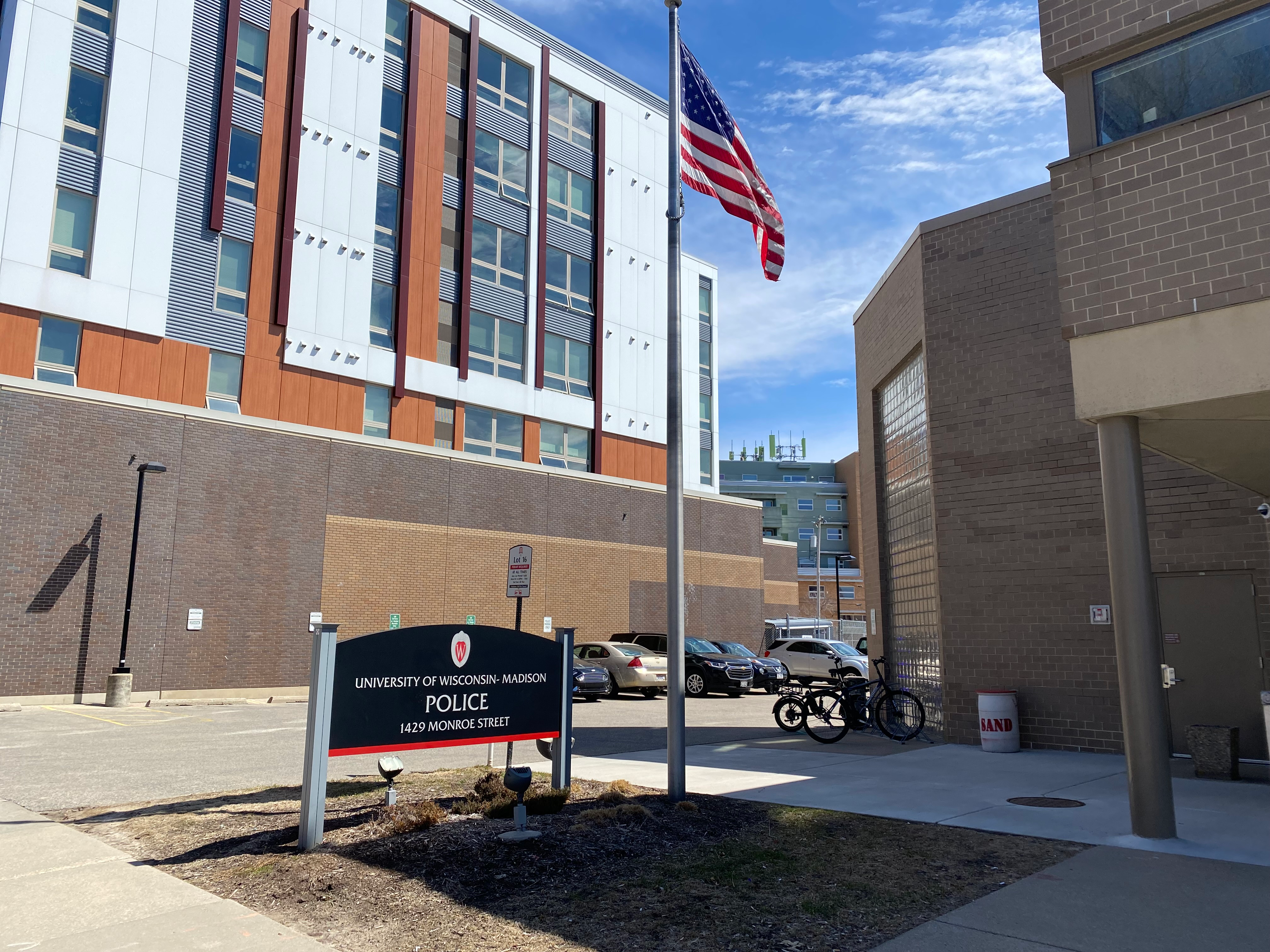
.jpg)
- By Dan Bauman
- Date: November 15, 2017
Originally published by The Chronicle of Higher Education at https://www.chronicle.com/article/how-a-defense-dept-program-equips-campus-police-forces/ [Archived]
Reason for republication: Paywall; Degraded Assets
Sue Riseling considers herself a realist. It’s an outlook forged during three decades in campus security, including her time as chief of police at the University of Wisconsin at Madison, and it informs her leadership of the International Association of Campus Law Enforcement Administrators, known as Iaclea. So when you ask her why campus police would need military equipment like mine-resistant vehicles, M-16 rifles, or riot gear, she has answers: Active shooters. Terrorist threats. Violent or armed protesters.
Like traditional policing organizations, Iaclea supported the Trump administration’s decision to roll back Obama-era restrictions on the acquisition of equipment from the Department of Defense. That equipment can be obtained through a federal program, known as the 1033 program, that transfers military surplus to law-enforcement agencies across the country.
Higher education’s use of the program has diminished somewhat since 2014, when police officers’ use of armored vehicles and military-grade guns against protests in Ferguson, Mo., drew intense public attention. According to a Chronicle analysis of government data, 93 colleges and universities today maintain more than 850 military-grade firearms transferred from the Defense Department — down from 125 institutions in late 2014. These firearms include Glock pistols, .45-caliber pistols, M-14 and M-16 rifles, and riot-type shotguns.
Four universities also maintain mine-resistant vehicles acquired through the program. And 33 colleges have used the program exclusively to obtain more commonplace items like shirts, flashlights, or firearm accessories.
But as campus police departments assess new threats and face tighter budgets, Ms. Riseling said it wouldn’t surprise her to see an uptick in their use of the 1033 program. Riot gear like helmets and shields, which can be expensive on the commercial market, are available through the program, Ms. Riseling said. The college pays only the cost of transfer and maintenance — a significant savings for budget-challenged campus departments, Ms. Riseling said.
Use of the 1033 program by law enforcement has concerned some libertarians, liberals, and academics. Critics of the program now fear that more college police chiefs and presidents — anxious about active shooters or armed white-supremacist protesters — might decide to militarize their departments with equipment like riot gear and firearms.
“A militarized response is only going to infringe on rights of speech and assembly,” said Kanya Bennett, legislative counsel for the American Civil Liberties Union. Broader use of military equipment by police, she said, “will only serve to escalate violence and turn a peaceful protest potentially into a situation of violence.”
Security and Speech
In truth, President Barack Obama’s 2015 executive order did very little to curb use of the 1033 program, said Peter Kraska, professor at Eastern Kentucky University’s School of Justice Studies, who has studied police militarization since the late 1980s. A ban on the transfer of .50-caliber or higher firearms, for instance, rang hollow, because the defense department hadn’t distributed such weapons between 2006 and 2015, according to NPR. Still, no firearms were transferred to a college between the end of 2015 and the middle of 2017.
The order required the federal government to put in place policies and practices around federally-resourced equipment transferred to law enforcement. Those policies required campus police departments to certify various steps would be taken before use of the 1033 program:
Policies and training for campus police departments were required to include “specific provisions on using equipment in a way that does not chill speech, is not disruptive to the educational environment, and does not foster a hostile climate among students.”
Armored vehicles were to be given a less-military appearance if possible, preferably by being painted a different color.
College or university governing boards were required to issue explicit approval before the acquisition of certain equipment, like weapons and mine-resistant ambush-protected vehicles, known as MRAPs.
It’s that last point that campus-security advocates and civil libertarians disagree on. Ms. Riseling argues that oversight of campus police departments’ operations should be left to colleges’ chief executives. “The idea that the board of trustees would sign off on how a particular department of geology gives grades on students exams would also be bad policy,” she said. “These things are better left to the professionals.”
“Nobody wants to believe that their campus needs an MRAP,” Ms. Riseling said. “Nobody wants to believe their campus needs a rifle. I think it’s very hard to sometimes get there with people whose jobs are to find the best academic talent, best research talent, best student talent.”
But Ms. Bennett of the ACLU argues that free speech on campus are best protected through the oversight of civilian boards and student councils. Ms. Bennett said students and staff should have a say “as to how they want to be policed, and what they want to be policed with.” Before using such gear, Ms. Bennett said, officers should heavily weigh the potential chilling effect on speech.
“There needs to be some parameters set,” Ms. Bennett said. “Is this gear only going to be used in high-stakes mass-shooting situations? Or are we okay with these MRAPs having a presence and potentially stifling speech?”
‘An Escalation’
At the University of Virginia, a specially trained corps of officers is directed to deploy military gear in response to potentially deadly situations, not as a proactive show of force. During the “Unite the Right” rally in mid-August, which saw torch-bearing white supremacists march on the campus, officers didn’t arm themselves with their 1033-program M-16 rifles, said Police Officer Benjamin Rexrode, community-service and crime-prevention coordinator for the department.
But that weekend’s unrest introduced new questions about how, and when to arm campus police in potentially dangerous situations. On the second day of the event, a white supremacist crashed his car into a downtown crowd, killing a protester, Heather Heyer; photos and videos captured militia members carrying semiautomatic rifles — legal in the open-carry state. “They had better equipment than our state police had,” Virginia’s governor, Terry McAuliffe, said at the time.
For the university to even consider arming its force with military rifles at a protest, Officer Rexrode said, would depend on how visibly and heavily armed some of the protesters were. He said the university and its officers understand how armed officers affect the environment on campus.
“You’re very cognizant when you carry those weapons around,” he said. “It’s just not a sidearm that we’re carrying on our belt. It’s a rifle, and it’s an escalation of a weapon.”
For Ms. Riseling, the events of Charlottesville and the October mass shooting at a country-music festival in Las Vegas underscore why access to affordable and reliable military gear is needed. To protect the university community and themselves, Ms. Riseling said, campus police officers need to be prepared for assailants and threats with ever greater firepower.
“We don’t want our police — regardless if they are at the airport, on a railroad car, or on a campus — we don’t won’t them to be disadvantaged at the start,” she said.
But Mr. Kraska remains skeptical about the need for high-level arms and gear on campus. Pre-emptive action against potential tragedy, he argued, “is incredibly seductive in a fear-based society, because something always might happen.”
He poses a question to administrators, officers, and students: “Are the risks and dangers that come along with this level of police militarization on college campuses worth the extremely unlikely event that something might happen?”